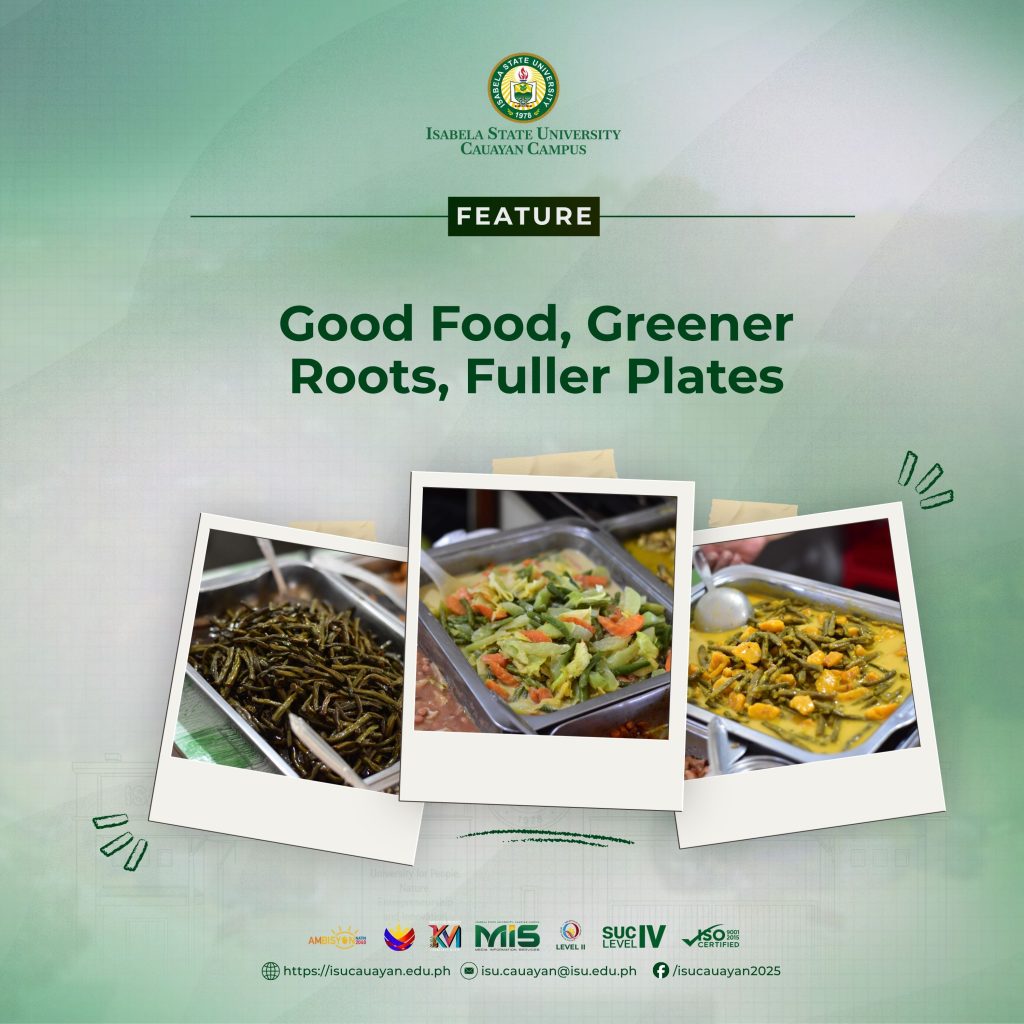
A meal tells a story long before it reaches the table. Behind every serving are the ingredients selected, the people who grow them, and the choices that determine how food is produced and consumed. Within a university, these decisions matter as a campus food system does more than feed its population; it can also shape eating habits, support local agriculture, and encourage more sustainable ways of living.
At Isabela State University-Cauayan Campus, the food court provides an avenue for making these choices through its use of locally available vegetables, seasonal produce, and vegetable-based dishes. By incorporating fresh agricultural products into everyday meals, campus food vendors offer alternatives that encourage diners to include more plant-based ingredients in their diets while recognizing the value of locally sourced food.
This practice begins with understanding what the land can provide. Rather than relying on a fixed selection of vegetables throughout the year, food vendors consider seasonal availability when purchasing their ingredients. Estelita Dalupang Eder, owner of the campus food court, explained that selecting vegetables depends largely on what is being harvested and what local suppliers can readily provide.
“We consider what vegetables are in season before making our purchases. We want to use what is readily available because these ingredients are fresher and more practical for our daily food preparation,” Eder shared.
Prioritizing seasonal produce allows the food court to work with the natural availability of agricultural products. It also creates opportunities to support local suppliers and farmers whose harvests become part of the campus dining experience. Through this connection, the university’s food choices extend beyond the canteen and into the agricultural communities that help sustain its supply.
Among the dishes that reflect this approach is chopsuey, a vegetable-based meal that incorporates ingredients such as cabbage, carrots, and sayote. According to Eder, the selection of ingredients also considers prevailing market prices, making the dish a practical option for both vendors and diners.
“Chopsuey is one of our practical choices because we can prepare it using vegetables that are available in the market. It gives our customers an opportunity to enjoy different vegetables in one meal without making the food too expensive,” she explained.
The presence of vegetable-rich dishes also responds to the dining preferences of members of the university community. Eder recognizes that vegetables remain an important part of the meals preferred by faculty members and instructors. Even when ingredient prices fluctuate, maintaining these choices remains a consideration in their food preparation.
These food choices carry significance beyond individual nutrition. Vegetable-centered meals provide opportunities for diners to explore alternatives to meat-based dishes and incorporate a wider range of ingredients into their diets. They also make plant-based eating more visible within the campus food environment, where daily meal decisions can influence long-term consumption habits.
For students, the value of choosing locally grown vegetables extends to the people and environment behind their production. Jocelle Julio, a Bachelor of Physical Education student, recognizes that food choices can contribute to the well-being of both consumers and agricultural communities.
“Choosing locally grown vegetables is a simple way of making responsible food choices. We take care of our health while also helping local farmers and supporting practices that are better for the environment,” Julio expressed.
Her perspective resonates with Sustainable Development Goal 2 (Zero Hunger), particularly its emphasis on sustainable agriculture, improved nutrition, and food security. Achieving this goal requires food systems that do not just provide sufficient meals but also encourage responsible production and consumption. In this regard, sourcing seasonal vegetables and incorporating locally available produce into campus meals represent practical ways of connecting everyday dining with broader sustainability objectives.
However, sustainable food choices must also consider the diversity of people who eat on campus. While vegetable-based dishes provide opportunities for plant-centered eating, vegetarian and vegan diets require more deliberate attention to ingredients and preparation. Vegetarian meals exclude meat, while vegan meals also avoid animal-derived ingredients such as eggs and dairy. Offering clearly identified options that meet these requirements would allow students, faculty, and personnel with different dietary preferences to participate more fully in the campus dining environment.
This presents an opportunity for the university and its food concessionaires to further develop their existing food offerings. Expanding plant-based selections, identifying ingredients, and providing meals that do not rely on animal products can make sustainable dining more inclusive. Such measures would complement the existing use of local and seasonal vegetables while giving diners greater freedom to make choices consistent with their nutritional needs and personal preferences.
Ultimately, sustainability begins with recognizing that every food choice has consequences beyond the plate. The vegetables purchased, the ingredients prepared, and the meals made available all contribute to the kind of food environment a university creates for its community. At ISU-Cauayan, the use of locally available produce and vegetable-rich dishes offers a foundation upon which more diverse and sustainable dining practices can grow.
A university does not have to look far to make sustainability part of everyday life. Sometimes, it begins with the vegetables on a serving tray, the produce purchased from local suppliers, and the willingness to make plant-based meals part of the choices available to everyone.
Thus, a greener food system is not built through grand gestures alone; it grows with every conscious choice that nourishes people, sustains livelihoods, and leaves the earth with more than what it takes.
—
#OneTeamBamboo | #BrightISU | #OneISU | #ISUlong | #ISUEducation | #TatakISU | #ISUAcademicExcellence | #ISUResearchExcellence | #ISUQualityAndRelevance | #ISU4Innovation
Get to know more about Isabela State University–Cauayan Campus by visiting our official website: https://isucauayan.edu.ph/